


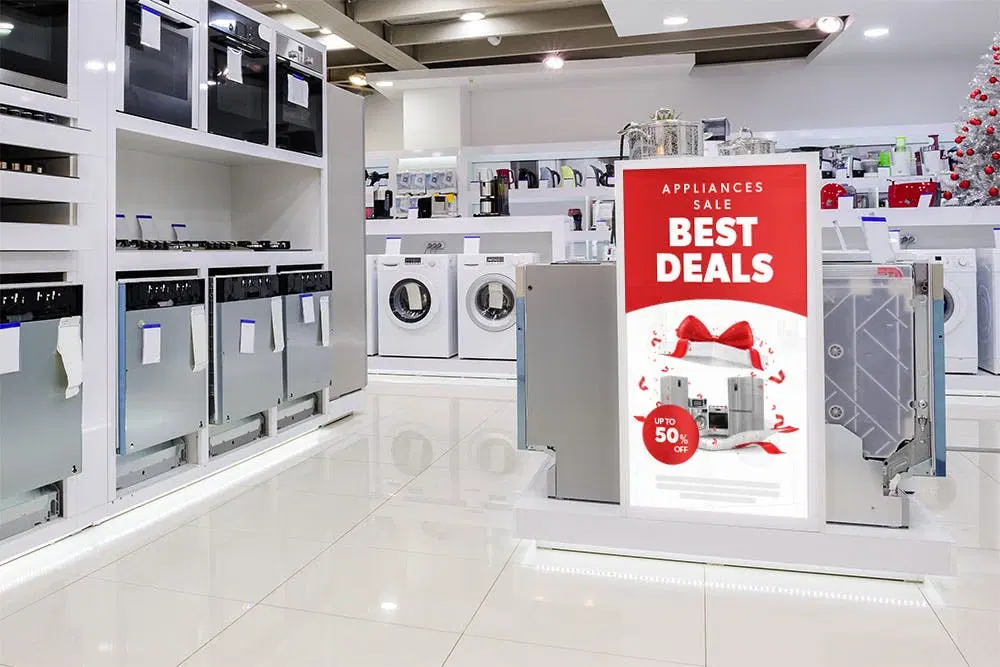
Visual merchandising displays are essential tools in retail, shaping the shopping environment to attract customers and increase sales. They go beyond product placement, blending creativity, strategy, and technology to create experiences that guide purchasing decisions and strengthen brand identity.
Thanks to digital signage solutions, traditional merchandising is evolving into dynamic, real-time engagement platforms. Retailers can now adapt promotions instantly, highlight key products, and enhance storytelling with motion graphics and interactive elements that keep customers engaged.

What Is Visual Merchandising and Its Impact on Sales
At its core, visual merchandising focuses on designing retail spaces that appeal to customer senses and emotions. Effective displays spotlight products, influence buying behavior, and improve customer satisfaction. Elements like lighting, store layout, and storytelling combine to create memorable shopping moments while encouraging longer browsing and higher sales.
Thoughtful displays also support cross-selling by positioning complementary items together, increasing average transaction values. By reinforcing brand values visually, visual merchandising builds long-term loyalty and makes shopping a more immersive experience.
Traditional vs. Digital Displays
Traditional displays like mannequins, shelving, and window setups remain important for tangible product interaction. They showcase fit, style, and seasonal storytelling in ways customers can physically relate to.
However, digital displays bring a modern edge. Video walls, interactive kiosks, and digital signage enable real-time promotions, stock updates, and multimedia storytelling. By integrating both, retailers create richer, more adaptive environments that balance tradition with innovation.
7 Types of Visual Merchandising Displays
- Window Displays
Create strong first impressions by drawing customers in. Adding digital signage with motion graphics and real-time content transforms static storefronts into dynamic showcases. - Endcap Displays
Positioned at aisle ends, these boost visibility for promotions and new products. Digital elements can add countdowns, animated highlights, and stock updates to encourage impulse purchases. - Product Displays with Screens
Embedded displays show demos, tutorials, and reviews directly at the point of decision. Shoppers gain valuable insights instantly, building purchase confidence. - POP (Point of Purchase) Displays
Located near checkouts, these displays drive cross-selling by featuring seasonal items, add-ons, or quick-decision products that inspire last-minute buys. - Themed Displays
Seasonal or event-driven themes create emotional connections. Digital signage enhances impact with multimedia content, soundscapes, or animations that bring stories to life. - Wayfinding Displays
Guide customers through large stores with clear navigation. Digital signage improves usability by dynamically updating directions and promotions along the journey. - Live Social Media Walls
Showcase user-generated content and real-time feeds, fostering interaction and community trust. Highlighting customer experiences doubles as social proof for the brand.
Engage, Impress, and Sell
Visual merchandising displays remain one of the most powerful tools in retail. They attract attention, tell a brand’s story, and create shopping experiences that convert browsers into buyers. By integrating digital signage, retailers gain flexibility, real-time adaptability, and higher engagement levels.
As customer expectations evolve, blending traditional techniques with innovative digital displays ensures retail spaces remain relevant, immersive, and profitable. Visual merchandising isn’t just about product presentation—it’s about crafting experiences that inspire purchases and build brand loyalty.


